







India Records 38% Drop in TB Deaths, But Accounts for 25% of Global Cases. Is the Country Winning the Fight Against Tuberculosis?
India has made significant progress in reducing tuberculosis (TB) deaths, but the disease continues to represent one of the country’s biggest public health challenges. According to the World...

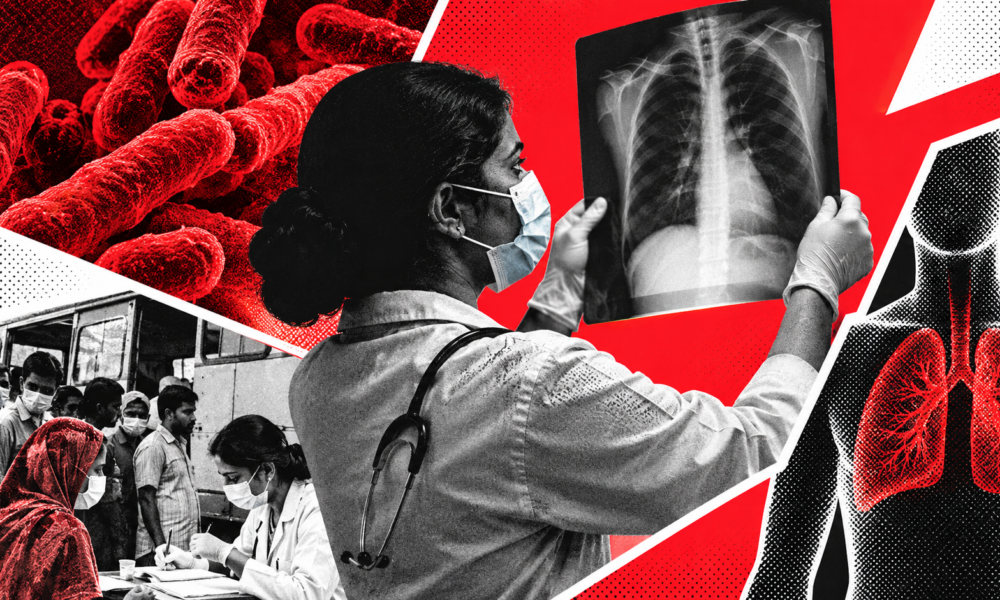
India has made significant progress in reducing tuberculosis (TB) deaths, but the disease continues to represent one of the country’s biggest public health challenges.
According to the World Health Organization’s (WHO) Global Tuberculosis Report 2026, India recorded a 38% decline in estimated TB mortality between 2015 and 2025. This is higher than the global reduction of 35% during the same period.
However, India still accounted for approximately 25% of all new tuberculosis cases worldwide in 2025. The figures highlight an important contradiction: while more patients are surviving the disease, preventing new infections and identifying undiagnosed cases remain major challenges.
- TB deaths are declining, but the disease burden remains high
India’s estimated TB mortality rate declined from 28 deaths per lakh population in 2015 to 18 deaths per lakh in 2025.
The improvement reflects progress in early diagnosis, treatment access, patient monitoring and nutritional support.
However, the WHO report identifies India as the country with the largest share of global TB cases. India accounted for approximately 25% of worldwide cases in 2025, followed by Indonesia at 10%, the Philippines at 6.8%, China at 6.5% and Pakistan at 6.4%.
This means that reducing deaths is only one part of the challenge. India must also improve prevention, diagnosis and treatment coverage to reduce the number of people developing the disease.
India News – Business Standard
- India’s screening campaign has reached over 25 crore people
The government’s TB Mukt Bharat Abhiyaan has expanded screening across vulnerable communities and high-risk populations.
According to the Ministry of Health and Family Welfare, between December 7, 2024 and November 8, 2026:
- More than 25 crore people were brought under intensified screening activities.
- Over 11 crore chest X-rays were conducted.
- More than 3 crore molecular diagnostic tests were performed.
- Approximately 48.64 lakh TB cases were detected.
- Nearly 14.97 lakh of the detected cases were asymptomatic.
The identification of people without obvious symptoms is particularly important because early detection can help patients access treatment sooner and reduce the risk of further transmission.
Press Information Bureau
- AI and faster diagnostics are changing TB detection
India is increasingly using technology to strengthen tuberculosis diagnosis.
Portable AI-enabled digital X-rays can help identify suspicious lung abnormalities and prioritise individuals for further testing.
Rapid molecular diagnostic tests, including nucleic acid amplification tests (NAAT), can help detect tuberculosis more quickly than conventional diagnostic approaches.
The Ni-kshay digital platform also supports patient tracking, treatment monitoring and programme management.
These technologies are particularly useful in remote and underserved communities, where access to specialised healthcare facilities can be limited.
Press Information Bureau
- Treatment success has reached 94%
India has reported a 94% treatment success rate among patients with drug-susceptible TB.
The government’s response also includes nutritional assistance through the Ni-kshay Poshan Yojana and community support through the Ni-kshay Mitra initiative.
These programmes are important because tuberculosis treatment requires consistent medical supervision and continued patient support.
The government has also reported that 96% of TB programme funding requirements are being met through domestic resources.
- The next challenge is eliminating the remaining burden
Despite the decline in mortality, India remains among the countries with the highest tuberculosis burden. It is also among the four countries accounting for more than half of global multidrug-resistant TB cases.
The WHO has indicated that India’s TB incidence estimates are expected to be reviewed and updated in early 2027 following further analysis of national survey and surveillance data.
For India, the next phase will require sustained investment in preventive healthcare, early diagnosis, accessible treatment, nutritional support and stronger community-level screening.
The bigger picture: India’s 38% reduction in TB mortality is an important public health achievement. But with one in four global TB cases occurring in the country, the fight is far from over.
The real measure of success will be whether India can turn improved survival rates into a sustained reduction in new infections.




No Comment! Be the first one.