








Why Do We Age? Causes of Ageing and What You Can Do About It
Ageing is a natural part of life- as we grow older our cells and body functions slightly change. Our cells cannot stay healthy and work perfectly forever. Scientists have developed about 300 theories...

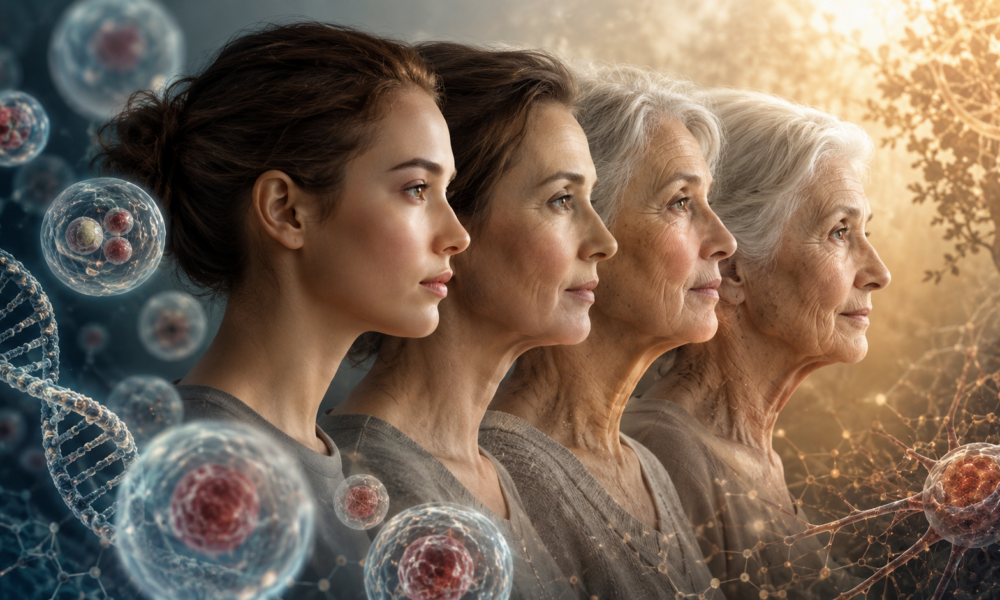
Ageing is a natural part of life- as we grow older our cells and body functions slightly change. Our cells cannot stay healthy and work perfectly forever. Scientists have developed about 300 theories as to why one ages. There is no single reason for ageing and it is likely caused by many processes working together.
Two main types of ageing are intrinsic ageing- as part of our biology, and extrinsic ageing , which is caused due to external factors such as lifestyle and environmental changes can affect how quickly one ages.
Ageing also depends whether air pollution, smoking, alcohol, poor nutrition, UV radiation from the sun, and stress.
When cells age, they instead of becoming building blocks of our body, they divide over time, and become less effective. Damage can build up inside cells. This can eventually affect how body works- the main theories about ageing state that the ageing generally falls into two categories: Programmed ageing theories,
These theories suggest that body is partially designed to age- while cells have a natural limit to how long they can function. While gene theory suggests that genes becomes active or inactive based on environment.
There is endocrine theory, which suggests that changing hormones can contribute to ageing. While immune theory suggests that our immune system becomes weaker as we age. Damage or error theories suggest that ageing happens naturally because they damage builds up in our cells.
As cells get damaged over time, they go through wear and tear, and become weaker. This also hinders body’s ability to repair damaged DNA. Moreover, if there is cross linking of DNA, the damaged proteins can build up and affect cell function. While theories also suggest that metabolism can affect lifespan, the strong evidence is still lacking. The free radicals can cause oxidative stress and cause cellular damage.
The damage to mitochondria can contribute to cellular ageing too. The genetic theories suggest that the role of genes in ageing is quite crucial. Telomeres protect the end of chromosomes- they become shorter as they divide.
Some cells stop dividing but they remain in the body. While the stem cell theory suggests that stems help repair tissues, but their function decline with age. Longevity genes help people live longer. However, genes are not the only factor that affects lifespan. Some studies say that genetics can influence about 25% of lifespan, suggesting that lifestyle and environmental factors also play an important role.
Some evolutionary theories suggest that ageing happens due to evolution and due to natural selection. These theories suggest that ageing can happen after body’s main reproductive years start to expire. This can lead to harmful mutation, which can build up later in life.
Some genes can help with reproduction early in life but have negative effects later- while some genes can help with reproduction early in life, they have negative effects later. The disposable soma theory suggest that body may put more resources into reproduction than long term cell repair.
These theories suggest that chemical reactions inside the body may contribute to ageing- while advanced glycation end products (AGEs) can form when sugar reacts with protein or fats.
Ageing does not happen for just one reason- genes, cell damage, chemical reactions, lifestyle and environment play an important role. Scientists are still studying exactly why humans age and how the process works. Healthy habits such as exercising and not smoking can affect health and lifespan, even though they cannot completely stop ageing.
Healthy habits such as not smoking and exercising can affect health and lifespan, even though they cannot completely stop ageing. Proteins help protect cells from stress, but this response can become weaker with age. Normal chemical reactions can gradually damage DNA, proteins and other substances in cells.







No Comment! Be the first one.